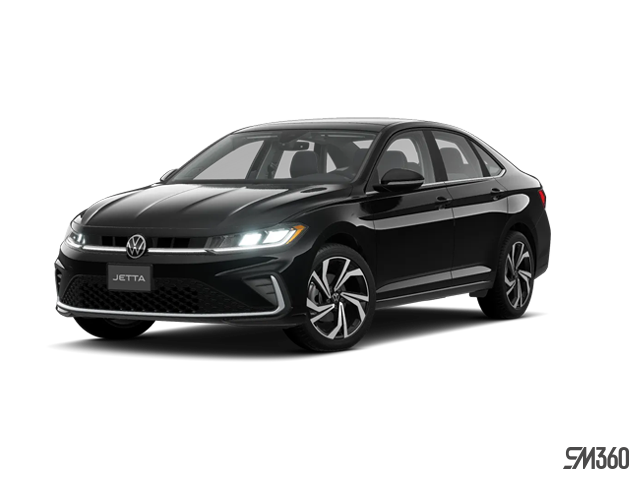
Photo for illustrative purposes only.
Find out more
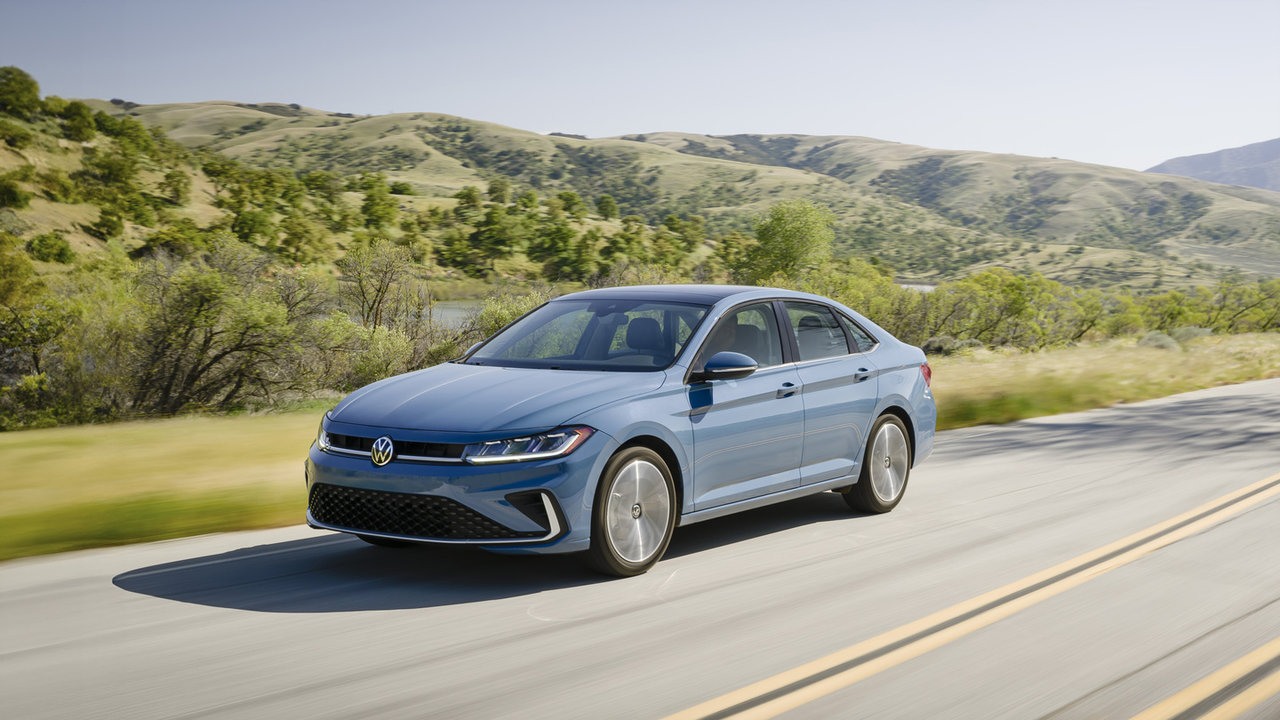
The 2026 Jetta lineup offers two distinct personalities, and knowing how each one drives makes it easier to see why the standard Jetta is the right everyday choice. Both are four-door sedans built on the same platform, but the engine, transmission, and chassis tuning underneath change the experience.
For British Columbia drivers splitting time between city commutes and open highway stretches, that difference matters more than any spec sheet. This comparison looks at how each Jetta actually drives, not just what each one lists on paper.
|
Spec |
Jetta |
Jetta GLI |
|
Engine |
1.5L turbocharged I4 |
2.0L turbocharged I4 |
|
Horsepower |
158 hp |
228 hp |
|
Torque |
184 lb-ft |
258 lb-ft |
|
Transmission |
8-speed automatic |
6-speed manual or 7-speed automatic DSG |
|
Fuel economy (city/hwy) |
8.2 / 5.9 L/100 km |
9.1 / 6.5 L/100 km (manual); 9.5 / 6.7 L/100 km (DSG) |
|
Curb weight |
1,361 kg |
1,474 kg (manual) / 1,506 kg (DSG) |
|
Wheels |
16 to 18-inch, by trim |
18-inch Belvedere alloy |
|
Seating |
5 |
5 |
|
Warranty |
4 yr/80,000 km basic; 5 yr/100,000 km powertrain |
4 yr/80,000 km basic; 5 yr/100,000 km powertrain |

The Jetta’s turbocharged 1.5-litre four-cylinder makes 158 hp and 184 lb-ft, paired with an 8-speed automatic and an ECO driving mode. Speed-sensitive power steering firms up at speed but stays light at parking-lot pace. There’s one transmission to think about, and it’s tuned for smooth, low-effort progress.
The GLI’s 2.0-litre turbo four steps up to 228 hp and 258 lb-ft, and here the transmission choice matters. A 6-speed manual puts every shift in the driver’s hands, while the 7-speed automatic DSG uses two clutches to pre-select the next gear, cutting shift times and keeping power delivery consistent through stop-and-go traffic or a curving on-ramp.
That choice changes the GLI’s character far more than the standard Jetta’s single-transmission setup ever could. The manual rewards a driver who wants full control over every gear change. The DSG stays relaxed in full-automatic mode but sharpens up in sport mode, letting the driver hold gears with paddle shifters when the road gets interesting.
Dynamic Chassis Control adds adaptive damping and Driving Profile Selection to the GLI, alongside a sports suspension, a front differential lock for putting power down out of corners, and progressive steering that quickens as the wheel turns further. Larger brakes, 340 mm vented rotors up front and 300 mm solid rotors at the rear with red calipers, back up the extra performance.
All of that comes with a trade-off: the GLI’s 9.1 to 9.5 L/100 km city rating sits above the standard Jetta’s 8.2 L/100 km. That’s the cost of the extra 70 hp and 74 lb-ft, and for a driver who wants a more energetic daily commute, it’s a reasonable one.
Quick-reference: GLI-only performance hardware - Dynamic Chassis Control with Driving Profile Selection - Front differential lock - Progressive steering - Dual exhaust and larger front/rear brake rotors with red calipers
Both sedans share the same core practicality: four doors, five-seat capacity, and an 8-inch touchscreen with wireless Android Auto and Apple CarPlay. The Jetta’s trunk holds 399 L, enough for the weekly grocery run or a couple of full duffel bags.
Instrument clusters differ by configuration. The Jetta starts with an 8-inch Digital Cockpit and moves up to the 10.25-inch Digital Cockpit Pro on higher trims. The GLI Autobahn comes standard with the larger 10.25-inch cluster, along with a leather sport steering wheel with paddle shifters and touch controls, ventilated front seats, and heated front and outer rear seats.
One detail worth knowing before deciding on a transmission: the myVW+ connected services, including the Vehicle Health Report and Safe & Secure crash notification, aren’t available with a manual transmission. That’s a small but real factor for a GLI shopper weighing manual against DSG.
For most drivers, the standard Jetta is the clear choice. Its automatic-only lineup keeps ownership simple, there’s no shifting decision to make, and fuel economy stays on the lower end of this comparison. The drive stays relaxed from the driveway to the highway on-ramp, which is exactly what most daily commutes call for. With its efficient turbocharged engine, straightforward automatic transmission, and comfortable everyday manners, the Jetta is built for the way most people actually drive.
The 2026 Jetta and Jetta GLI share a sedan body and warranty coverage, but the powertrain underneath sets their personalities apart: one tuned for calm, efficient daily use, the other for a more engaged drive with a transmission to match.
Visit Capilano Volkswagen in North Vancouver to sit in the Jetta and the Jetta GLI, feel the difference between the automatic, manual, and DSG setups, and ask our team which configuration fits your everyday routine.
Photo for illustrative purposes only.
Find out more
Impressive Cargo Capacity: What the 2026 Volkswagen Taos Can Carry
At a glance The 2026 Volkswagen Taos holds 790 L behind the rear seats and up to 1,866 L with them folded in front-wheel-drive form (705 L and...
Read more
Supporting Our Community: Cruise the Shore for Charity
Supporting Our Community: Cruise the Shore for Charity North Vancouver, BC — August 2026 — Capilano Volkswagen was proud to be one of two major...
Read more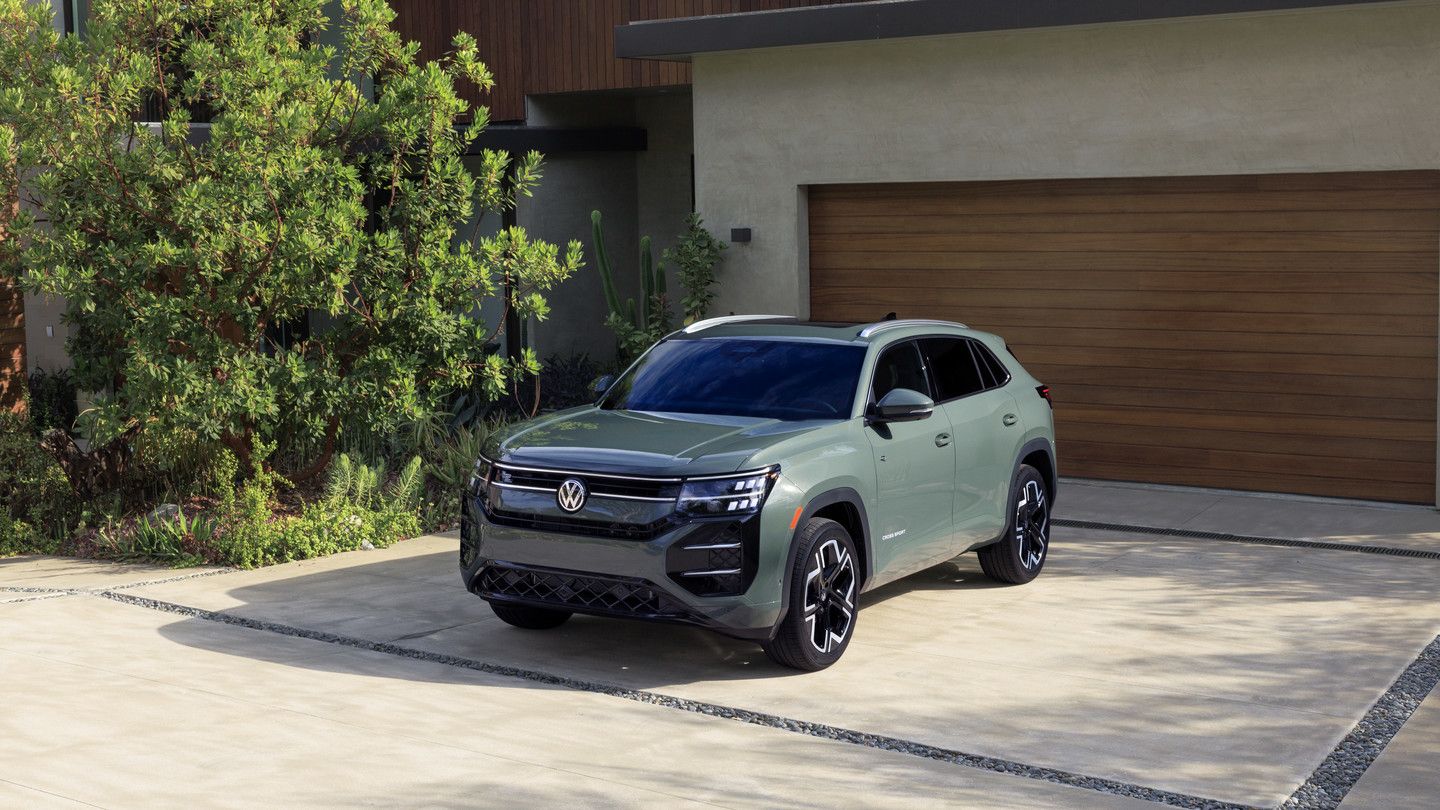
Volkswagen Officially Reveals the Second Generation 2027 Atlas Cross Sport
At a glance Volkswagen has revealed the second-generation 2027 Atlas Cross Sport. It keeps the five-seat, two-row coupe-style layout and adds a 282...
Read morePowered and developed by
